

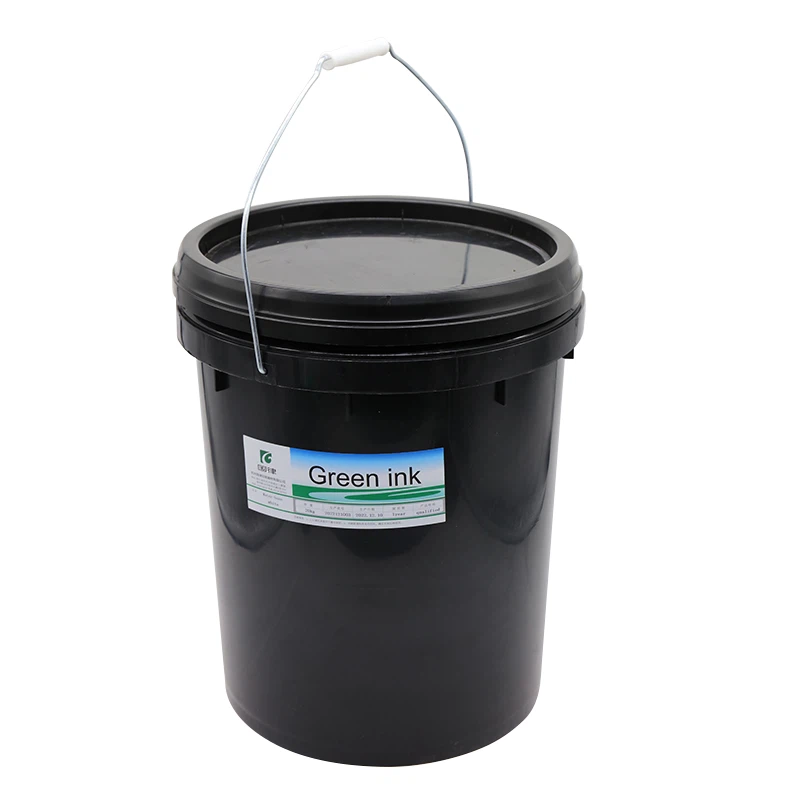
Ink For Printing On Plastic
Screen printing ink is a special ink used in screen printing process. It is suitable for various substrates such as paper, plastic, metal, glass, textiles, etc. It can achieve high-quality color performance, bright printed patterns and high contrast. Our ink for printing on plastic can be used for various plastic products and has high adhesion and wear resistance.
- Fast Delievery
- Quality Assurance
- 24/7 Customer Service
Product Introduction
ink for printing on plastic
High adhesion
In order to obtain a strong adhesion on the smooth plastic surface, plastic screen printing inks usually contain special adhesives that can enhance the adhesion between the ink and the plastic substrate.
Strong wear resistance
Plastic inks need to maintain stability in various environments, so they usually have good wear and weather resistance and can withstand the influence of UV, chemicals, friction and other environmental factors.
Color
vividness
High-quality plastic screen printing inks can achieve bright color performance, ensure that the printed patterns are clear and the colors are full, and are suitable for application scenarios with high visual requirements.
Versatility
Some plastic inks have special functions such as UV resistance, scratch resistance, waterproof, anti-fingerprint, etc. to meet the needs of specific applications.
Operation and precautions
Substrate surface treatment: Since plastic surfaces are usually hydrophobic or have low surface energy, surface treatment such as corona treatment, flame treatment, and plasma treatment is often required before printing to improve ink adhesion.
Ink preparation: Depending on the plastic material and printing requirements, the ink may need to be prepared, such as adjusting viscosity, color, drying speed, etc. to ensure the best printing effect.
Drying and curing: Different types of inks dry in different ways. For example, solvent-based inks are generally dried by natural evaporation, while UV-curable inks require ultraviolet radiation curing. The appropriate drying method must be selected according to the specific ink type.
Environmental protection and safety: For some applications, especially food packaging or children's toys, it is very important to use inks that meet environmental and safety standards.

After-Sales Service

Our professional team keeps in touch with customers to understand their specific needs. For unique quality or functional requirements, our two R&D teams work hard to meet these requirements. During the production process, we maintain ISO9000 certified quality control to ensure that each product meets high quality standards. We follow ISO14000 and SGS guidelines to manufacture in an environmentally responsible manner. We keep customers informed of production progress and provide complete sales services after delivery. Our professional service team provides equipment installation, operator training and maintenance services as needed.
We also provide annual insurance plans for remote and on-site service support. For printing material products such as inks, accessories and testing equipment, we provide tailored usage training, operating manuals and instructions. We provide remote technical support and compatibility testing for printing inks and substrates. Our company conducts professional training courses on test equipment for four working days and issues certificates upon completion. On-site technician support is available if required.

FAQ
1.How does the viscosity of screen printing ink affect the printing effect?
Too high viscosity may cause the screen to clog or the pattern to be unclear; too low viscosity may cause the ink to flow too strongly and cause blurred edges. By adjusting the viscosity, you can ensure that the ink passes through the screen smoothly and forms a clear pattern.
2.What does the solid content of screen printing ink mean?
Solid content refers to the proportion of non-volatile components in the ink. Inks with high solid content contain more pigments and binders, and the coating formed after curing is thicker; inks with low solid content are thinner. The choice of solid content affects the coverage, color saturation and printing effect of the ink.
3.How to judge whether the screen printing ink needs to be diluted?
If the ink is not fluid enough during the screen printing process or cannot pass through the screen evenly, it may need to be diluted. The choice of diluent should be based on the type of ink (such as solvent-based, water-based) and the manufacturer's recommendations. Excessive dilution may affect the adhesion and color concentration of the ink.
4.How to adjust the gloss of ink for printing on plastic?
The gloss of the ink can be adjusted by adding different gloss agents or matting agents. Gloss agents increase the gloss of the ink, while matting agents reduce the gloss. Adjusting the glossiness can be determined according to the design requirements and purpose of the printed product.
5.How to deal with the precipitation problem of ink for printing on plastic?
Ink precipitation is usually caused by long-term storage or insufficient stirring. Before use, the ink needs to be fully stirred to ensure that the pigment and binder are evenly distributed. If the precipitation is severe, it can be handled with appropriate stirring equipment, but care should be taken not to introduce bubbles.
Hot Tags: ink for printing on plastic, China ink for printing on plastic manufacturers, suppliers, factory, gold water based screen printing ink, Screen Printing Ink, water based screenprinting ink, Water based screen printing ink with special effect, Water Based Screen Printing Ink for Paper, Oil Based Screen Printing Ink


