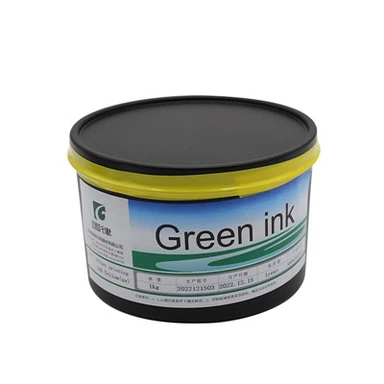
Offset Ink For Printing
Offset Ink For Printing is a core material designed specifically for lithographic printing and is widely used in publications, packaging, advertising and other fields.
- Fast Delievery
- Quality Assurance
- 24/7 Customer Service
Product Introduction
Offset inks are an ink system developed based on the principle of water-oil incompatibility. They transfer the image from the printing plate to the substrate using a rubber roller. Based on the printing equipment and drying method, they can be categorized as follows:
Sheet-fed inks: Suitable for coated and matte papers, such as Sakata Ink's eco-friendly series, offer high gloss and fast drying properties.
Rotary inks:
Heatset: Used in commercial printing presses, they dry quickly through heat and are suitable for coated papers.
Coldset: Dries through penetration and is commonly used in newsprint printing.
UV offset inks: Cures instantly through ultraviolet light and are suitable for non-absorbent materials such as metal and plastic. Examples include Yaying Ink's Jade Eagle series, which offers high adhesion and abrasion resistance.
Eco-friendly inks: Soy-based inks (such as Mattel's MT3-01 series) reduce VOC emissions and comply with ISO 12647-2 color standards. Water-based and waterless offset inks further reduce environmental impact.
Core Ingredients and Features
Basic Formula:
Pigments: Provide color, such as magenta, cyan, yellow, and black. High transparency is required to achieve layered effects.
Binder: Resin (such as rosin-modified phenolic resin) determines the drying process, while vegetable oil (soybean oil) or mineral oil adjusts fluidity.
Additives: Desiccant accelerates oxidative curing, detackifiers adjust viscosity, and UV inks contain photoinitiators.
Key Performance:
Drying Speed: Oxidative curing takes approximately 10-30 minutes, while UV curing cures instantly.
Viscosity: TV value of 8-11 (tested on a tack meter at 400 rpm) ensures transfer stability during printing.
Adhesion: Bonds to the substrate through chemical bonds or mechanical interlocking. For example, food packaging inks require resistance to oil and grease.
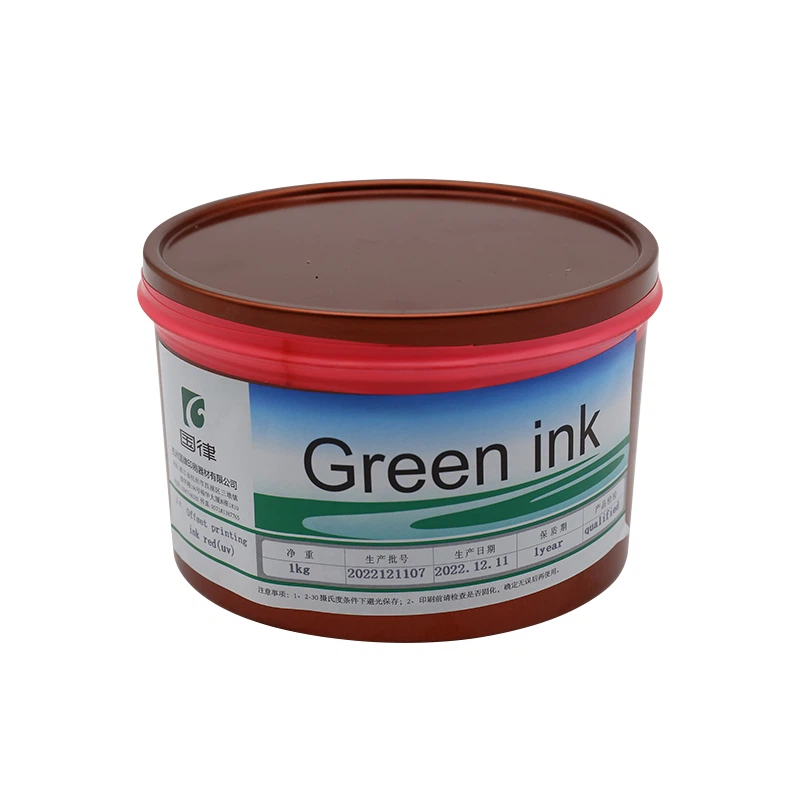

FAQ
Why is pigment particle size controlled to ≤15μm in offset ink production? What impact will substandard fineness have on printing results?
Controlling pigment particle size to ≤15μm is crucial for ensuring print clarity and color uniformity. The offset printing process relies on stable ink transfer between the rubber roller and the printing plate. Excessively coarse pigment particles can cause the following problems: First, they can easily clog the printing plate dots, causing blurred images and broken lines, particularly affecting the printing accuracy of fine features (such as anti-counterfeiting labels and electronic circuit boards). Second, they can reduce the transparency and overprinting of the ink colors, resulting in inaccurate representation of the target color gamut during four-color overprinting (for example, it can be difficult to meet the color requirements of the ISO 12647-2 standard). Third, they can increase rubber roller wear and shorten equipment life. During production, pigment fineness is typically achieved using a three-roller inking mill, and specialized equipment is used to measure fineness to ensure batch consistency.
Hot Tags: offset ink for printing, China offset ink for printing manufacturers, suppliers, factory, Offset Printing Ink, UV offset ink, thermochromic ink offset printing, web offset printing ink, offset printer ink, Offset UV Ink