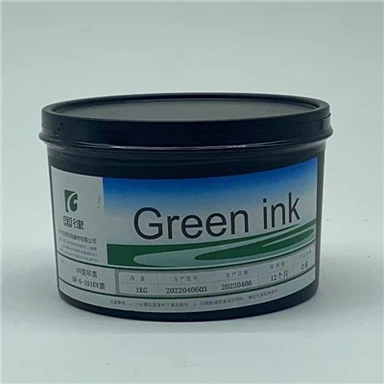
Uv Ink For Offset Printing
UV offset ink is a light-curing ink designed specifically for lithographic printing. It achieves instant curing through ultraviolet (UV) or LED-UV light source irradiation, completely solving the pain points of traditional inks such as slow drying and high VOC emissions.
- Fast Delievery
- Quality Assurance
- 24/7 Customer Service
Product Introduction
Efficiency:
Drying Speed: Traditional inks require 1-3 minutes for oxidation drying, while UV inks cure instantly upon contact with light, completely eliminating sticking on printed products.
Compatibility: Compatible with traditional offset press upgrades (by adding a UV curing module). LED-UV models offer 70-80% energy savings and a lamp lifespan of up to 10,000 hours (10 times that of traditional UV lamps).
Quality Breakthrough:
Color Performance: Covers over 95% of Pantone's color gamut, dot gain <15%, and highlight gloss exceeding 85°.
Physical Properties: Alcohol-resistant (50 wipes at 75% concentration with no fading) and retort-resistant (121°C/30 minutes), making it suitable for food packaging and industrial signage.
Key Application Scenarios
High-end Packaging:
Cosmetic boxes (high-gloss mirror effect), wine gift boxes (compatible with metallic inks), and pharmaceutical packaging (low-odor, tamper-evident).
Case study: An international cosmetics brand used UV ink to print mascara tubes, achieving 800 abrasion tests and a 98% gloss retention rate.
Commercial Printing:
Magazine covers (LED-UV curing enables instant varnishing), and anti-counterfeiting labels (a combination of fluorescent and invisible inks).
Case study: A publishing house used UV ink to print children's picture books, achieving VOC emissions below detection limits and passing EU toy safety standards.

FAQ
UV offset inks achieve instant curing in 0.1-1 seconds. What specific ingredients are responsible? What are the functions of each ingredient?
Instant curing relies on the synergistic reaction of "photosensitizer-prepolymer-diluent." The functions of each component correspond exactly to the original formula:
Photosensitizers (such as benzophenone and mirbak ketone): Core "trigger" agents. After absorbing UV/LED-UV light, they quickly generate free radicals, providing the "starting energy" for subsequent reactions and are key to achieving a "0.1-second rapid response."
Prepolymers (such as epoxy acrylate and polyurethane acrylate): The "backbone component" of the ink. They undergo cross-linking reactions under the action of free radicals, forming a three-dimensional network structure that directly determines the cured ink's abrasion resistance (over 500 cycles) and temperature resistance (150°C).
Diluents (such as TMPTA and TPGDA): Adjust ink viscosity (suitable for 15,000 sheets/hour rotary presses). They also participate in the cross-linking reaction, helping the prepolymer form a dense structure and ensuring a gloss of 85° in highlight areas of the printed product. Additives (waxes, defoamers): Although not directly involved in curing, waxes can improve scratch resistance after curing. Defoamers eliminate "white spots" that may occur during rapid curing, ensuring the quality of printed products.
Hot Tags: uv ink for offset printing, China uv ink for offset printing manufacturers, suppliers, factory, UV Inks for Offset Printing, fluorescent offset printing inks, offset sublimation ink, web offset printing ink, Offset Ink, uv offset printing ink