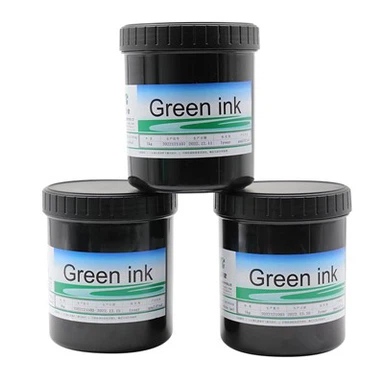
Screen Printing Ink Uv Resistant
UV screen printing inks are cured by ultraviolet light to form a highly durable coating, and their UV resistance usually depends on the light stabilizer and resin system in the formulation. Some UV inks are designed for outdoor applications and have anti-ultraviolet ingredients added to delay fading and degradation.
- Fast Delievery
- Quality Assurance
- 24/7 Customer Service
Product Introduction
Curing characteristics: UV curing technology is usually used, which can quickly cure and dry under ultraviolet light, greatly improving production efficiency, and will not dry quickly on the screen, which can effectively save ink and reduce costs.
Adhesion performance: It has good adhesion to a variety of printing materials such as plastics (PVC, ABS, etc.), metals, glass, ceramics, textiles, etc., ensuring that the printed pattern is firm and not easy to fall off.
Weather resistance: It has excellent UV resistance, can effectively resist ultraviolet radiation in the sun, maintain the color brightness and integrity of the printed pattern for a long time, and is not easy to fade or discolor. It is suitable for printed materials such as signs and advertisements that are used for a long time outdoors.
Chemical stability: It has good chemical resistance and can resist the erosion of chemicals such as acids, alkalis, and solvents. It maintains the stability of the printed pattern in different environments. For example, when used for chemical product packaging printing, it can prevent the ink from being corroded by chemicals.
Physical properties: The cured ink film has high hardness and wear resistance, which can effectively prevent scratches and wear and protect the printed pattern. At the same time, some inks also have good flexibility and are suitable for printing on flexible materials, such as silicone.


FAQ:
What is the impact of ink viscosity on printing quality?
It is mainly reflected in the following aspects:
Ink transfer rate: Viscosity affects the efficiency of ink transfer from the printing plate to the substrate. Too high or too low viscosity will lead to uneven transfer, affecting the solid density and color saturation.
Dot expansion and image clarity: Low viscosity causes ink diffusion, serious dot expansion, and reduced image sharpness; high viscosity may result in insufficient transfer, affecting detail reproduction.
Drying speed and adhesion: Viscosity adjustment affects drying time, and it is necessary to balance drying speed and adhesion to avoid penetration or shedding.
Printing process stability: Viscosity changes cause fluidity problems, such as nozzle clogging or ink breakage, affecting the quality consistency of continuous printing.
Color consistency and gloss: Viscosity affects ink spreading, which in turn affects color uniformity and gloss, and needs to be strictly controlled to maintain visual effects.
Hot Tags: screen printing ink uv resistant, China screen printing ink uv resistant manufacturers, suppliers, factory, uv plastisol ink, UV Ink for Screen Printing, UV screen printing ink for metal, uv cure screen printing ink, UV Screen Ink, UV Curable Screen Printing Inks