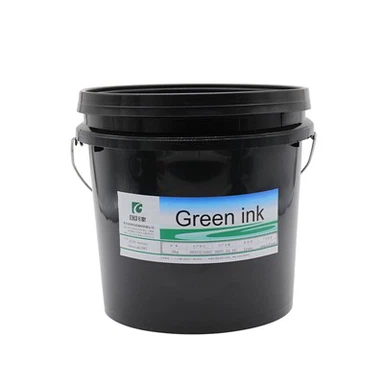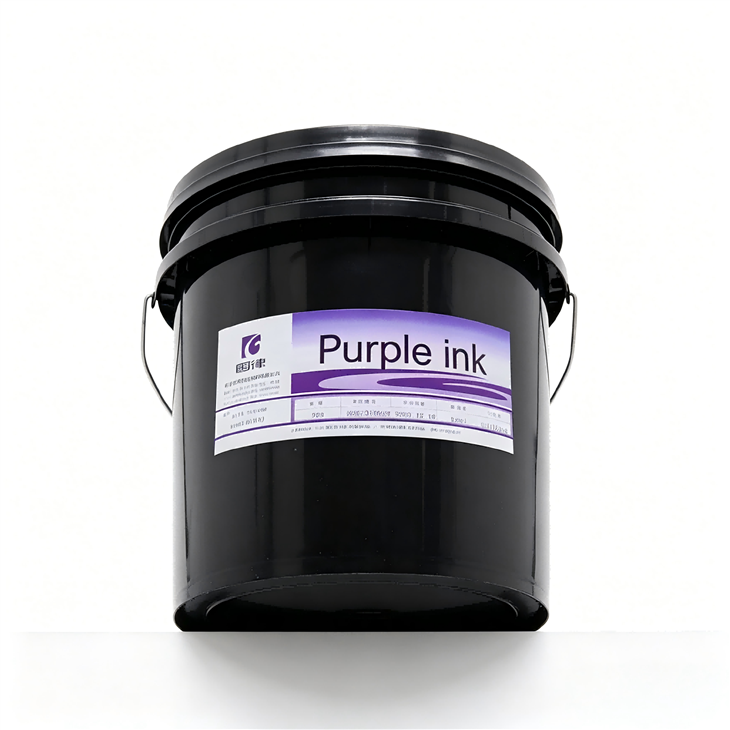
UV Ink For Flexographic Printing
This ink system completely eliminates volatile solvents, and all components participate in the photopolymerization and crosslinking reaction to form a solid ink film. The reactive monomers, acting as diluents rather than volatile solvents, are completely crosslinked into molecular chains after ultraviolet light irradiation, without volatilization or precipitation.
- Fast Delievery
- Quality Assurance
- 24/7 Customer Service
Product Introduction
Photopolymerization crosslinking reaction serves as core working principle. When 365nm-405nm ultraviolet ray irradiates ink coating, photoinitiator absorbs photon energy and decomposes into active free radicals. Free radicals trigger chain opening polymerization of double bonds inside oligomer and monomer molecules, continuous molecular chain crosslinking forms compact solid film layer, finishing instant drying and molding without evaporation process.
Raw Material Configuration
Inorganic and organic color pigments act as color developing base material. Aliphatic polyurethane acrylate and epoxy acrylate are selected as main oligomer materials. Tripropylene glycol diacrylate and pentaerythritol triacrylate are used as low-viscosity reactive diluents. Aryl ketone type photoinitiator is matched to adapt medium-pressure UV lamp radiation condition. All raw materials comply with food contact printing auxiliary material standard.
Applicable Operating Condition
Adapt to conventional flexo press running speed ranging 60m/min to 300m/min. Working environment temperature scope 18℃-32℃, relative humidity controlled 40%-70%. Matching UV curing lamp power 80W/cm to 160W/cm. Suitable for non-absorbent substrates including PE film, PP film, PET film, aluminum foil and coated paper, unavailable for uncoated plain paper with strong water absorption.
On-site Application Process
Inject qualified UV ink into flexo ink tank, adjust anilox roller mesh count 180-400 lines to control single ink transfer thickness 2μm-8μm.
Ink adheres to anilox roller mesh cavity, transferred to flexible printing plate surface via roller rotation contact.
Patterned ink layer is covered on substrate surface under plate pressing action.
Printed substrate passes through UV curing lamp chamber, complete crosslinking curing within 0.1s-0.3s.
Finished printed material enters rewinding section, no natural drying waiting period required.
Customization Options

FAQ:
1. What is the fundamental difference between UV flexographic ink and solvent-based flexographic ink in composition and curing mechanism?
Composition difference: UV flexographic ink is a 100% solid four-component system (pigment, acrylic oligomer, reactive monomer, photoinitiator) with zero volatile organic compounds (VOCs). Solvent-based flexographic ink contains 40%-60% volatile alcohol or ester solvents as carriers, with no reactive monomer and photoinitiator components. Curing mechanism difference: UV flexographic ink relies on 365nm-405nm UV photon-induced free radical polymerization crosslinking reaction to form a solid film, with curing completed in 0.1s-0.3s. Solvent-based ink achieves film formation through natural evaporation of volatile solvents, requiring 5s-30s air drying time and no chemical crosslinking reaction.
2. What are the threshold parameters of UV lamp power and printing speed to ensure complete curing of UV flexo ink?
Complete curing matching threshold: When the printing speed is 60-150m/min, the matched UV lamp power is 80-100W/cm; when the printing speed is 150-300m/min, the UV lamp power must be increased to 120-160W/cm. Curing qualification standard: The ink film has no surface tack after curing, the crosslinking rate reaches ≥95%, and no ink peeling or transfer occurs after 50 times of 180° tape peeling test. Insufficient lamp power or excessive speed will lead to incomplete double-bond polymerization, resulting in residual surface viscosity and poor friction resistance.
Hot Tags: uv ink for flexographic printing, China uv ink for flexographic printing manufacturers, suppliers, factory, Flexo Ink, Flexo Printing Ink, Flexographic Ink, Flexographic Printing Inks, UV Flexo Ink, water based inks for flexographic printing