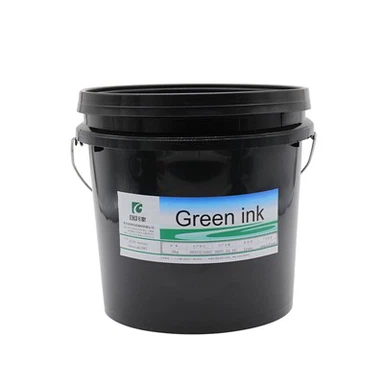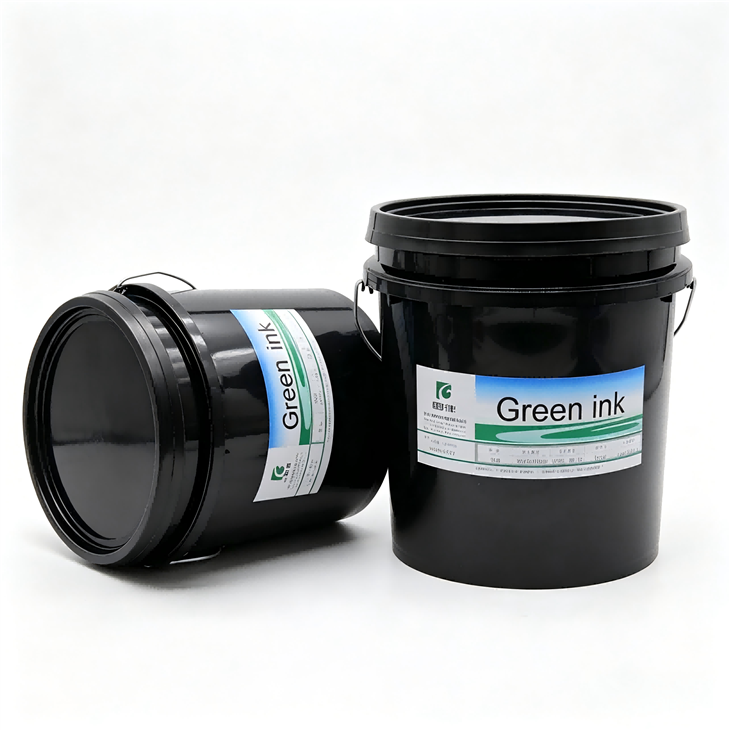
Scratch Resistant UV Flexo Ink
Scratch-resistant UV Flexo Ink is essentially a UV-curable ink system that enhances abrasion resistance by increasing crosslinking density and surface hardness.
- Fast Delievery
- Quality Assurance
- 24/7 Customer Service
Product Introduction
Working Principle
The curing of UV flexographic inks is essentially a free radical-initiated photopolymerization reaction:
Upon UV light irradiation, the photoinitiator decomposes to generate free radicals. These free radicals initiate a reaction between acrylate monomers and oligomers, forming a three-dimensional crosslinked network.
The core of scratch resistance lies in:
1. Increasing Crosslink Density
Using high-functionality oligomers (such as trifunctional or multifunctional polyurethane acrylates)
Enhancing the density of the network structure
👉 Result: A harder surface, improved scratch resistance
2. Surface Energy and Slip Control
Adding specific waxes or slip additives (such as PTFE or silicones)
Reducing the coefficient of friction
👉 Result: Reduced actual damage from scratches
3. Film Structure Uniformity
Ink leveling determines surface smoothness. A more uniform surface results in more stable scratch resistance.
| Parameter | Details |
|---|---|
| Curing Wavelength | 365-395nm (UV-LED compatible) |
| Curing Time | 2-5 seconds (60-100mJ/cm²) |
| Wash Resistance | ≥50 cycles (ISO 105-C10, 60℃) |
| Substrates | Cotton, polyester, nylon, blended cloth labels |
| Viscosity | 150-300 cP (adjustable for flexo presses) |
| Color Range | CMYK + custom Pantone spot colors |
| Shelf Life | 12 months (sealed,15-25℃) |

FAQ:
How to determine the "scratch resistance" of scratch-resistant UV flexographic inks?
In actual production, a uniform standard is rarely used. Instead, on-site testing methods are employed:
Manual rubbing (rubbing back and forth with a dry cloth/paper towel)
Eraser test
Rubbing tester (setting the number of cycles and pressure)
The key is not "whether there are scratches," but rather:
👉 Whether it affects the appearance or color fading under actual transportation and processing conditions.
Different customers have different standards, so customized testing conditions are usually required for each application.
Why is the surface still easily scratched after UV curing, even though it's very hard?
This is a common problem, and there are generally three underlying reasons:
Surface hardness ≠ Complete overall curing
Surface curing first, but insufficient internal cross-linking
Actual abrasion resistance is still poor
Ink layer is too thick
Insufficient UV light penetration
Incomplete inner layer curing
Insufficient smoothness
High coefficient of friction
More prone to scratches
👉 Conclusion: Scratch resistance is not simply about increasing hardness, but about curing depth + surface structure + formulation balance
Hot Tags: scratch resistant uv flexo ink, China scratch resistant uv flexo ink manufacturers, suppliers, factory