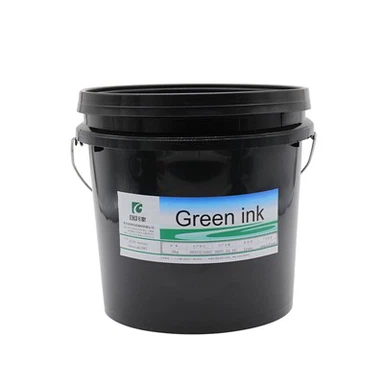
Chemical Resistant UV Flexo Ink
Chemical Resistant UV Flexo Ink is a UV-curable flexographic ink system specifically designed for environments involving contact with chemical media.
Its core objective is not simply "printing," but rather to form a chemically inert and highly cross-linked protective ink film after printing to resist:
solvent corrosion (alcohol, ketones, esters)
oil contamination (food oils, industrial lubricants)
detergents (surfactants, alkaline/acidic solutions)
mild industrial chemical contact
In B2B applications, our ink is typically used in packaging, labeling, industrial marking, and other scenarios involving long-term or frequent exposure to chemicals.
- Fast Delievery
- Quality Assurance
- 24/7 Customer Service
Product Introduction
Key Performance Characteristics
1. Excellent Solvent Resistance
Resistant to common solvents including:
IPA (Isopropanol)
Ethanol
Acetone (short-term contact)
Ester solvents
👉 Common Applications: Labels wiped with alcohol do not smudge or fog.
2. Stability Against Oils and Food Contact
Resistant to penetration by edible oils and fats
Surface is less prone to "blooming" or staining diffusion.
👉 Particularly suitable for outer layer printing on food packaging.
3. Resistant to Cleaning Agents
Resistant to:
Alkaline cleaning agents
Surfactant cleaning solutions
Industrial scrubbing environments
👉 Used for industrial labels and equipment markings.
4. Highly Stable Ink Film After UV Curing
Not easily softened
Not easily swollen
High long-term stability
5. Good Printability
Compatible with:
High-speed flexographic printing presses
Low to medium screen rulings (300–500 LPI)
LED UV/mercury lamp UV systems
| Parameter | Details |
|---|---|
| Curing Wavelength | 365-395nm (UV-LED compatible) |
| Curing Time | 2-5 seconds (60-100mJ/cm²) |
| Wash Resistance | ≥50 cycles (ISO 105-C10, 60℃) |
| Substrates | Cotton, polyester, nylon, blended cloth labels |
| Viscosity | 150-300 cP (adjustable for flexo presses) |
| Color Range | CMYK + custom Pantone spot colors |
| Shelf Life | 12 months (sealed,15-25℃) |
Selection Recommendations
When selecting a Chemical Resistant UV Flexo Ink, the following must be clearly defined:
Type of contact medium (alcohol/grease/detergent)
Contact time (instantaneous/long-term immersion)
Substrate type
Whether subsequent lamination or varnishing is required
Type of UV equipment (LED or Mercury)
Chemical resistance = Crosslinking structure design × Curing energy × Substrate system compatibility

FAQ:
What is the core difference between chemical-resistant UV flexographic inks and regular UV inks?
The core difference lies not in the "formulation name," but in the density of the crosslinking structure and the polarity design after curing.
Regular UV Inks:
Focus more on printability and cost
Medium crosslinking density
Moderate resistance to solvents (alcohol, cleaning agents)
Chemical-resistant UV Inks:
Use high-functionality resin systems (PUA/EA structure)
Denseer ink film, lower absorbency
More hydrophobic surface, reducing solvent penetration
What kind of alcohol can cause ordinary UV ink to rub off?
This is a very common problem in the label industry.
There are three main reasons:
Insufficient cross-linking
Insufficient UV curing energy
Unreacted areas still exist within the ink film
High resin polarity
Alcohol (IPA) is a polar solvent
Easily penetrates and damages the structure
Low surface density
Fast surface drying but loose inner layer
Wiping directly damages the ink layer.
Hot Tags: chemical resistant uv flexo ink, China chemical resistant uv flexo ink manufacturers, suppliers, factory, Flexo Printing Ink, UV Flexo Ink, Flexo Ink, water based inks for flexographic printing, UV Inks for Flexo Printing, flexo ink printing