


Offset Printer Ink
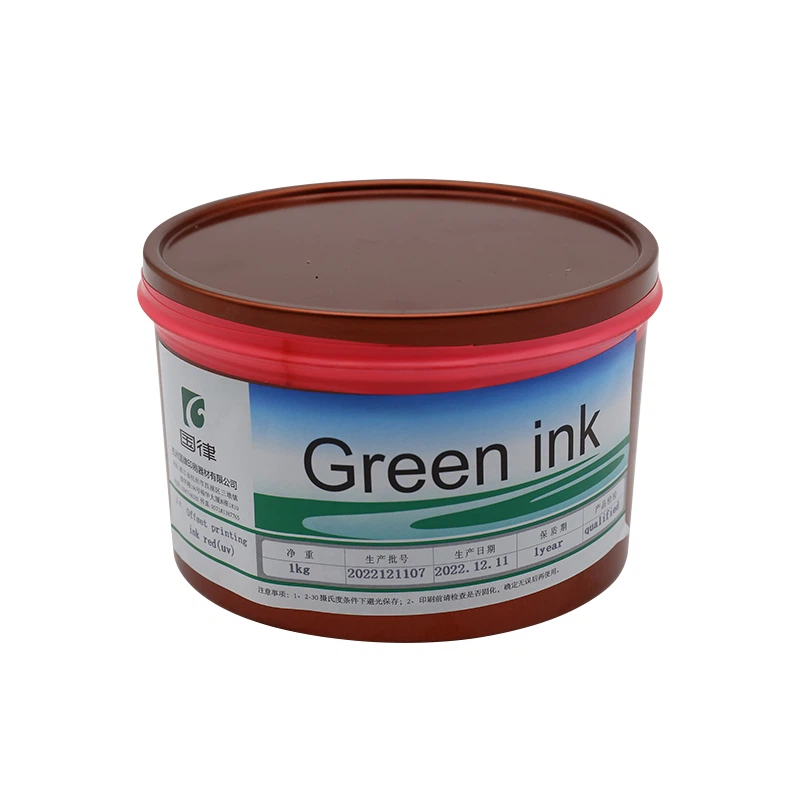
Offset printer ink is a specialized type of ink designed for use in offset printing presses. Its primary function is to transfer images and text from the printing plate to various substrates such as paper, cardboard, and certain plastics with high precision and quality.
- Fast Delievery
- Quality Assurance
- 24/7 Customer Service
Product Introduction
Pigment: This is the coloring component that determines the ink's color, gloss, texture, etc. Organic pigments made from carbon are often used for black ink, while inorganic pigments, which are chemical mixtures, are used for colored inks.
Vehicle: It is the liquid part that holds and transports the pigment particles. Common vehicles include oils like soya oil or linseed oil, and synthetic vehicles such as phenolic resins.
Modifiers: These are added to control the ink's drying speed, smell, resistance to fading, and other properties. For example, driers speed up drying, and waxes prevent issues like ink setoff.
Classification
By Printing Machinery: It can be divided into sheetfed offset ink and web offset ink. Sheetfed offset inks include glossy offset ink, resin offset ink, UV offset ink, and offset ink for synthetic paper.
By Drying Method: It includes penetration drying type, such as web offset inks for newsprint; oxidation drying type, which contains polymers that oxidize in the air to form a polymer film; and volatile drying type, where the solvent in the ink evaporates to form a film.

FAQ
1.What are the advantages of ink offset printing?
1. Drying Mechanism
Offset Printer Ink
Commonly dries through oxidation - polymerization. Inks containing binders like alkyd resins react with oxygen in the air. Over time, this chemical reaction forms a cross - linked, solid film. For example, in a sheet - fed offset press, the printed sheet is left to dry in the open air, and the ink gradually hardens. This process can be relatively slow, but it provides good adhesion and durability.
UV - Curable Inks
Dry instantaneously when exposed to ultraviolet (UV) light. A photo - initiator in the ink starts a polymerization reaction upon UV irradiation. This makes UV - curable inks ideal for high - speed production lines, as there is no need to wait for the ink to dry naturally. For instance, in label printing, where rapid processing is crucial, UV - curable inks can be cured within seconds.
Water - based Inks
Dry mainly by evaporation of water. As the water in the ink evaporates into the air, the pigments and binders are left behind to form a dry film. The drying time is affected by factors such as humidity and temperature. In printing on porous substrates like paper, water - based inks can dry relatively quickly, but in high - humidity environments, the drying process may be significantly slowed.
2. Viscosity and Transfer Mechanism
Offset Printer Ink
Has a relatively medium - high viscosity. It transfers from the printing plate to a rubber blanket and then onto the substrate. The ink's viscosity needs to be carefully controlled to ensure proper transfer. If the viscosity is too high, the ink may not transfer evenly, leading to issues like ink starvation. If it's too low, over - inking and smudging can occur. For example, in offset lithography, the ink's tack (stickiness) also plays a role in the transfer process between the different components of the press.
Flexographic Inks
Have a low to medium viscosity. They are transferred from an anilox roller to the substrate. The low viscosity allows the ink to flow easily through the engraved cells of the anilox roller. This is suitable for flexible substrates like plastic films and paper, where a thinner layer of ink is often required to prevent issues like cracking when the substrate is bent.
Screen Printing Inks
Are much thicker in consistency compared to offset inks. They are forced through the mesh of a screen onto the substrate. The high viscosity of screen - printing inks is necessary to maintain the integrity of the design as it passes through the screen. This type of ink can be used on a wide variety of substrates, from textiles to glass, and can create a more textured and opaque print.
3. Substrate Compatibility
Offset Printer Ink
Adheres well to a variety of substrates, including different types of paper (coated, uncoated), cardboard, and some plastics. However, for some non - traditional or difficult - to - print plastics, special pretreatment of the substrate or formulation of the ink may be required. For example, in packaging printing, offset ink can be used on both paper - based cartons and certain plastic - coated boards.
Digital Printing Inks (Inkjet and Toner)
Inkjet inks are formulated to work well with specific inkjet printer models and paper types. They are designed to be absorbed quickly into the paper fibers to prevent smudging. Toner, used in laser printers, is a powder that fuses to the substrate under heat and pressure. Digital inks may have limitations in terms of substrate variety compared to offset inks, especially when it comes to printing on rough or non - porous surfaces without special treatment.
Rotogravure Inks
Are mainly used for high - volume printing on flexible substrates such as plastic films, foils, and some types of paper. These inks need to have good flow characteristics to fill the engraved cells of the gravure cylinder. They are optimized for the continuous - roll printing process of rotogravure presses.
4. Print Quality and Application
Offset Printer Ink
Can achieve high - resolution printing, capable of reproducing fine details, sharp text, and smooth color gradients. It is widely used in applications where high - quality, long - lasting prints are required, such as in the publishing of art books, high - end magazines, and product packaging. The two - step transfer process (plate to blanket to substrate) helps in achieving a more even ink distribution, resulting in a consistent and high - quality finish.
Pad Printing Inks
Are designed for printing on irregularly shaped objects. They have the ability to conform to the shape of the object being printed. Pad printing inks are often used for printing on items like promotional products, small electronic devices, and automotive parts. The print quality may not be as high - resolution as offset printing in some cases, but it excels in printing on non - flat surfaces.
Hot Tags: offset printer ink, China offset printer ink manufacturers, suppliers, factory, offset sublimation ink, Offset UV Ink, Offset Printing Ink, dry offset printing inks, web offset printing ink, thermochromic ink offset printing


