Water-Based Screen Printing Ink: Formulation Optimization, Performance Enhancement, And Industry Applications
Mar 30, 2026
In recent years, environmental regulations, workplace safety standards, and sustainable manufacturing trends have significantly accelerated the adoption of water-based inks in the global printing industry. Compared with traditional solvent-based inks, water-based inks offer a cleaner, safer, and more eco-friendly solution. They reduce volatile organic compound (VOC) emissions, eliminate harmful solvent residues, and provide a safer working environment for operators.
Particularly in screen printing applications, water-based inks are gaining attention due to their compatibility with diverse substrates such as paper, PET films, and PVC materials. However, despite their environmental advantages, conventional water-based screen printing inks still face technical challenges, including poor gloss, insufficient abrasion resistance, weak adhesion, and slower drying performance.
Challenges of Traditional Water-Based Screen Printing Inks
Although water-based inks offer environmental benefits, they are often associated with several performance limitations that restrict their broader industrial application.
1. Low Gloss Performance
Traditional water-based inks tend to produce matte or semi-gloss finishes, which may not meet the visual requirements of high-end packaging, branding materials, or decorative prints.
2. Poor Abrasion Resistance
Printed surfaces are often prone to wear and scratching, especially in packaging or labeling applications where frequent handling occurs.
3. Weak Adhesion
Achieving strong adhesion on non-porous substrates such as PET and PVC films is a major challenge, leading to peeling or flaking issues.
4. Slow Drying Speed
Water evaporation is inherently slower than solvent evaporation, which can reduce production efficiency in high-speed printing environments.
5. Back-Sticking (Blocking) Issues
After printing, insufficient drying or improper formulation can cause printed layers to stick together, affecting product quality.
Research Objective: Developing a High-Performance Water-Based Ink
To address the above challenges, the objective is to formulate a water-based screen printing ink that:
Delivers high gloss and excellent visual appearance
Provides superior abrasion resistance
Enhances adhesion on multiple substrates
Maintains suitable viscosity for screen printing
Improves drying speed and anti-blocking properties
Keeps production costs competitive
Methodology: Formulation Optimization Approach
To achieve optimal performance, a systematic experimental methodology was adopted, combining single-factor analysis and orthogonal experimental design.
1. Single-Factor Optimization
Each component in the ink formulation was individually adjusted to evaluate its impact on key properties such as:
Viscosity
Gloss
Drying speed
Abrasion resistance
Adhesion
This step helped identify the optimal dosage range for each ingredient.
2. Orthogonal Experimental Design
After determining preliminary ranges, an orthogonal experimental method was applied to optimize the formulation efficiently. Multiple performance indicators were tested simultaneously, including:
Ink viscosity
Surface gloss
Abrasion resistance
Drying speed
Adhesion strength
Anti-blocking performance
This approach ensures a balanced optimization of all critical parameters rather than focusing on a single property.
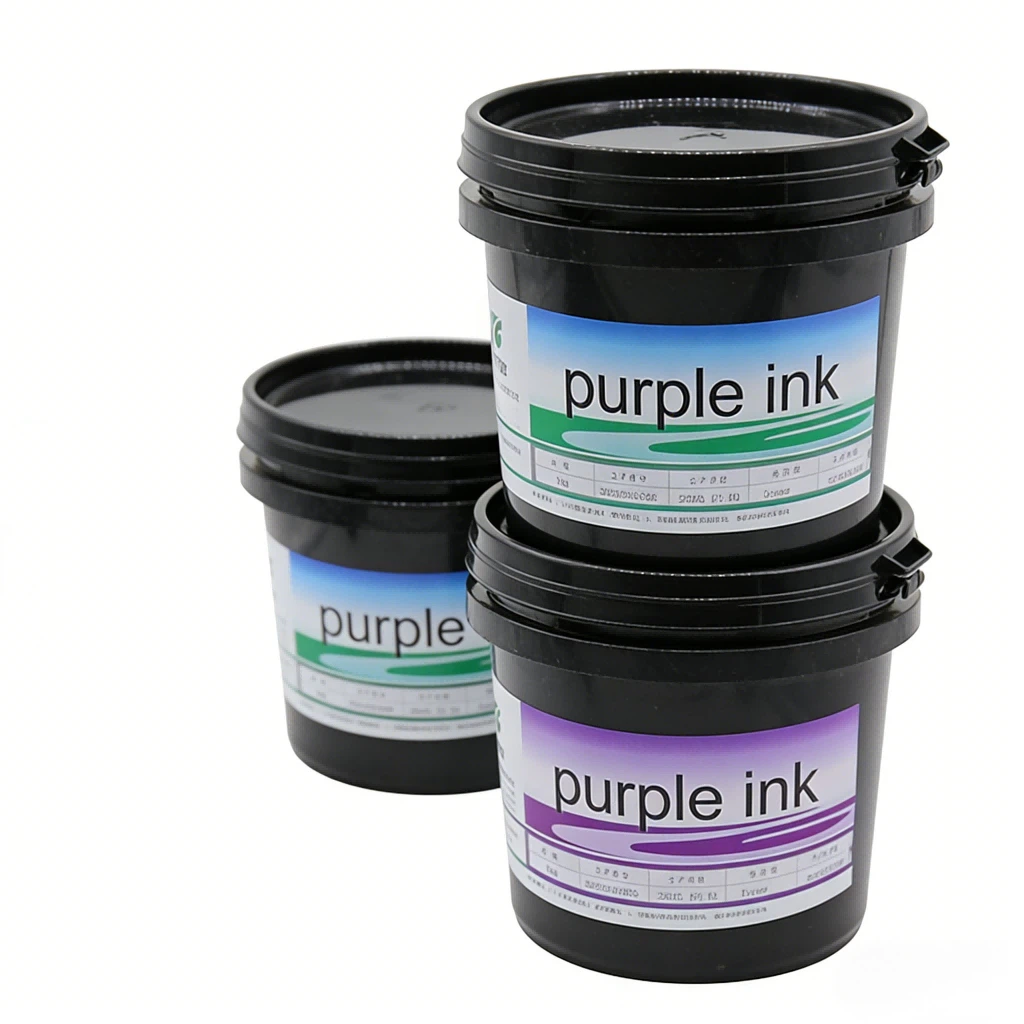
Optimized Formulation of Water-Based Screen Printing Ink
Through systematic experimentation, the optimal formulation (by mass percentage) was determined as follows:
Styrene-acrylic resin: 27%
Ethylene glycol (slow drying agent): 5%
Cellulose acetate butyrate (CAB modified resin): 0.75%
Defoamer: 1.0%
Polyethylene wax emulsion: 6%
Ammonia solution: 11%
Associative thickener: 0.8%
Deionized water: 38.25%
Pigment: 10%
Total: 100%
Functional Analysis of Key Components
1. Styrene-Acrylic Resin (27%)
This is the primary film-forming material, providing:
Strong adhesion
Good water resistance
Balanced flexibility and hardness
It plays a crucial role in improving gloss and durability.
2. Ethylene Glycol (5%)
Acts as a slow-drying agent to:
Prevent premature drying on the screen
Improve leveling and print smoothness
Enhance print consistency
3. Cellulose Acetate Butyrate (0.75%)
A modified resin that contributes to:
Improved gloss
Better film formation
Enhanced chemical resistance
4. Polyethylene Wax Emulsion (6%)
Critical for:
Improving abrasion resistance
Enhancing surface smoothness
Reducing friction
5. Ammonia Solution (11%)
Used to:
Adjust pH levels
Stabilize the dispersion system
Improve resin solubility
6. Associative Thickener (0.8%)
Controls viscosity and ensures:
Proper ink transfer during screen printing
Uniform coating thickness
7. Pigments (10%)
Provide color strength and opacity while maintaining compatibility with the water-based system.
Performance Testing and Evaluation
To validate the formulation, multiple instruments and standardized tests were used.
1. Viscosity Testing
Using a digital viscometer, the ink demonstrated:
Stable viscosity
Excellent printability
Consistent flow behavior
2. Abrasion Resistance Testing
Using a wear resistance tester, the ink showed:
Significant improvement in scratch resistance
Enhanced durability for packaging applications
3. Gloss Measurement
The optimized formulation achieved:
Higher surface gloss compared to conventional water-based inks
Improved visual appeal for commercial printing
4. Adhesion Testing
Tested on multiple substrates:
Paper (including coated surfaces)
PET films
PVC films
Results showed excellent adhesion with no peeling or flaking.
5. Drying Performance
The ink achieved a balanced drying rate:
Fast enough for industrial production
Slow enough to prevent screen clogging
6. Anti-Blocking Performance
The addition of wax and optimized drying conditions significantly reduced back-sticking issues.
Industrial Applications of Water-Based Screen Printing Ink
The optimized ink can be widely applied across multiple industries:
1. Greeting Cards and Stationery
High gloss and vibrant colors enhance visual appeal
Strong adhesion ensures durability
2. Packaging Printing
Suitable for color boxes and retail packaging
Resistant to handling and transportation wear
3. Labels and Signage
Excellent adhesion on plastic films
Long-lasting performance in various environments
4. Flexible Film Printing
Ideal for PET and PVC film applications
Maintains flexibility without cracking