Screen Printing Ink: Types, Applications, And A Guide To Choosing The Right Manufacturer
Oct 19, 2026
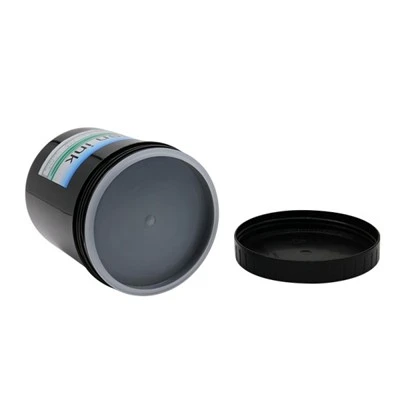
Screen printing ink is a specialized printing material used to transfer graphics, text, patterns, and functional coatings onto different substrates through a mesh screen and stencil. Its formulation determines how well the ink passes through the mesh, adheres to the surface, develops color, and withstands abrasion, washing, weather exposure, and other operating conditions.
For printing companies, packaging converters, industrial manufacturers, and bulk buyers, selecting the right formulation involves more than matching colors. Substrate compatibility, ink chemistry, curing requirements, print performance, production speed, and total processing cost all influence the final result. Different applications require different formulations, from flexible textile coatings to industrial inks designed for plastics, glass, or metal.
What Is It and How Does the Process Work?
The printing process uses a mesh screen and stencil to transfer ink to selected areas of a substrate. A squeegee pushes the material through open sections of the mesh, while the stencil blocks unwanted areas.
After printing, the deposited layer must dry, evaporate its carrier, or cure through heat, ultraviolet radiation, or a chemical reaction, depending on the formulation.
Screen preparation
A mesh screen is coated with photosensitive emulsion and exposed to the artwork to create the required stencil openings.
Ink transfer
The squeegee forces the prepared ink through open mesh areas, forming the intended image on the substrate.
Drying or curing
The printed layer develops its required adhesion, hardness, flexibility, and resistance under the specified processing conditions.
Quality inspection
Operators inspect color consistency, coverage, adhesion, surface defects, and application-specific performance.
Unlike processes that rely on inkjet nozzles or conventional printing rollers, screen printing can deposit relatively thick layers. This makes it suitable for opaque graphics, textured finishes, specialty effects, and selected functional coatings.
Main Types and Their Characteristics
The chemistry of a printing formulation affects its transfer behavior, film formation, adhesion, and durability. The following categories cover common options used in commercial and industrial production.
|
Ink Type |
Characteristics |
Typical Applications |
|---|---|---|
|
Water-Based Ink |
Uses water as a major carrier; can provide a soft hand feel on textiles. Drying depends on formulation and substrate absorption. |
Cotton garments, fabric products, paper, and selected porous materials |
|
Solvent-Based Ink |
Uses organic solvents to control flow, transfer, and film formation; suitable for selected surfaces requiring specific adhesion or resistance. |
Industrial labels, plastic containers, and equipment panels |
|
UV-Curable Ink |
Cures through ultraviolet radiation, enabling rapid film formation under compatible conditions. Performance depends on ink chemistry, UV exposure, and substrate. |
Glass bottles, plastic containers, labels, and graphic panels |
|
Plastisol Ink |
Typically contains PVC resin dispersed in a plasticizer; heat fuses the ink into a durable film with strong opacity. |
T-shirts, sweatshirts, sportswear, and promotional clothing |
|
Specialty and Functional Inks |
Provide effects or properties such as metallic finishes, raised textures, conductivity, or enhanced resistance. |
Promotional merchandise, decorative packaging, membrane switches, and selected electronic components |
These categories can overlap. The appropriate formulation depends on the carrier system, curing mechanism, substrate compatibility, and intended application.
Applications Across Different Industries
Textiles and Apparel
Logos, promotional graphics, sportswear markings, and fashion designs. Key requirements include wash durability, stretch resistance, opacity, and surface feel.2
Packaging and Containers
Decorative graphics on glass bottles, plastic jars, and rigid packaging. Adhesion, scratch resistance, color consistency, and chemical compatibility are important.
Electronics and Industrial Components
Control-panel graphics, membrane-switch markings, scales, and selected functional layers. Specialized conductive formulations are required for electrical applications.
Promotional Products
Branded drinkware, pens, tools, and household goods. The ink must match the actual surface material and any existing coating.
Industrial labels and graphic panels are another important application. Manufacturers use printed symbols, operating instructions, identification marks, and warning graphics on equipment. Depending on the environment, resistance to abrasion, chemicals, handling, and outdoor exposure may take priority over decorative appearance.
Key Benefits for Commercial Production
- High Opacity and Ink Deposit: Suitable formulations can provide strong coverage on dark surfaces and create relatively thick printed layers.
- Versatile Surface Effects: Metallic finishes, textured graphics, and other specialty effects can be achieved with compatible formulations.
- Repeatable Production: Controlled screen preparation, ink handling, and press settings support consistent output across manufacturing runs.
- Application-Specific Durability: Formulations can be developed for flexibility, abrasion resistance, chemical exposure, or outdoor service conditions.
- Production Flexibility: The process can accommodate customized graphics and repeat orders, depending on screen setup, artwork complexity, and production-line configuration.
These benefits depend on formulation and process control. A product designed for soft textile printing, for example, may not meet the chemical-resistance requirements of an industrial control panel.
Selection Guide for Buyers and Production Teams
Selecting the right screen printing ink requires evaluating substrate compatibility, curing conditions, required performance, and total production cost.
Step 1: Identify the Substrate
Confirm the material type, surface coating, and pretreatment. Plastics, glass, metals, and textiles have different adhesion requirements. Remove dust, grease, and other contaminants before printing.
Step 2: Match Ink to the Application
|
Application |
Ink Type to Consider |
|---|---|
|
Soft-feel textile graphics |
Water-based ink |
|
Opaque garment printing |
Plastisol ink |
|
Fast industrial production |
UV-curable ink |
|
Plastic containers |
Substrate-specific UV or solvent-based ink |
|
Glass and metal decoration |
Dedicated UV or two-component ink |
|
Metallic or raised effects |
Specialty-effect ink |
|
Chemical-resistant markings |
Chemically resistant formulations |
Final selection depends on the actual substrate and production conditions.
Step 3: Confirm Curing Conditions
Check the technical data sheet for curing temperature, processing time, UV exposure, and hardener ratios. Ensure the production line can maintain the required conditions consistently.
Step 4: Test Print Performance
Evaluate adhesion, abrasion resistance, chemical resistance, flexibility, color consistency, and weathering resistance as required by the end application.
Step 5: Compare Total Production Costs
Consider ink consumption, setup and cleaning, curing energy, production speed, rejected products, and waste-not just the purchase price per kilogram. Stable batch quality can reduce rework and improve cost control for repeat orders.
How to Evaluate a Screen Printing Ink Supplier
B2B buyers should assess technical suitability, quality systems, manufacturing capability, and continuity of supply rather than comparing prices alone.
Formulation Expertise
Choose a manufacturer with formulations suited to your substrate, printing process, curing system, and end-use requirements. Application-specific expertise helps reduce adhesion problems and printing defects.
Technical Documentation
Review technical data sheets (TDS) and safety data sheets (SDS) for processing conditions, storage requirements, handling procedures, and specified performance properties.
Quality Control and Traceability
Assess raw-material inspection, finished-product testing, batch records, color consistency, and procedures for managing nonconforming products. These controls help maintain consistent quality across production batches.
Manufacturing and Bulk Supply
Evaluate production capacity, packaging options, lead times, and repeat-order consistency. A supplier's ability to support ongoing bulk orders is important for production planning and supply continuity.
Why Choose GUOLV for Screen Printing Ink Solutions?
Hangzhou Guolv Printing Materials Co., Ltd. specializes in printing inks and coatings, supported by a 32-member R&D team and an annual production capacity of 10,000 tonnes of inks and coatings. The company provides customized solutions tailored to different printing processes and application requirements, backed by quality control procedures covering color measurement, viscosity, chromatographic analysis, and friction testing. Its broader portfolio includes printing materials, intelligent printing equipment, and inspection systems. For businesses seeking tailored formulations and bulk supply, GUOLV offers Screen Printing Ink solutions for diverse production needs.