

Main Properties, Composition And Classification Of Water-based Ink
Jul 04, 2024
Water-based ink Water-based ink is referred to as water-based ink, and flexible water-based ink is also called liquid ink. With the continuous improvement of environmental awareness, the market's requirements for inks are getting higher and higher. Therefore, environmentally friendly water-based inks have emerged and gradually become a market trend. According to data from well-known institutions, it is estimated that by 2027, the total consumption of water-based inks will reach 576,000 tons, with a value of US$5.1 billion, and will continue to grow at a compound annual growth rate of 3.1%.
1 Performance of water-based ink
Water-based ink, as an environmentally friendly ink, has water-based solvents as its main characteristics, and has the characteristics of low volatile organic compound (VOC) emissions, high solid content and fast drying. Compared with traditional solvent-based inks, it has significant advantages in environmental performance and can reduce the negative impact on the environment and human body. At the same time, water-based inks have excellent adhesion, transparency and printing performance, meeting various printing needs. With the continuous improvement of technology, water-based inks can be comparable to traditional inks in quality and performance, and even surpass them. The following are its main performance characteristics:
- The viscosity of water-based ink has an important impact on its printing quality. Low viscosity may cause problems such as light color of printed patterns, unreal printing, enlarged dots, and uneven ink transfer. High viscosity may reduce the ink transfer performance of the ink, causing uneven ink color, slow ink drying speed, plate sticking, stickiness, poor leveling, etc. Different problems can be solved by adjusting the ink viscosity or adding corresponding thickeners.
- Color is the intuitive performance of water-based ink, which is determined by hue and tinting strength. The ink color is controlled by using standard ink samples or standard printing samples, or the same series of inks are mixed with each other according to the needs of the printing plant to obtain the required hue.
- The biggest advantage of water-based ink is to reduce the emission of volatile organic compounds (VOCs), effectively prevent air pollution, optimize the printing environment, and greatly reduce the risk of fire. Compared with solvent-based inks, water-based inks eliminate the risk of poisoning to the human body and packaging items, and improve the overall environmental quality. It is especially suitable for packaging and printing products with strict hygiene requirements such as food and medicine.
However, water-based ink faces many challenges in the process of promotion. For example, the production cost of water-based ink is high, which puts it at a disadvantage in market competition; in terms of technology, the printability of water-based ink is relatively poor, and it has high requirements for printing equipment and operating technology; in addition, some companies and consumers have insufficient knowledge of water-based ink and do not have a comprehensive understanding of its environmental performance and advantages.
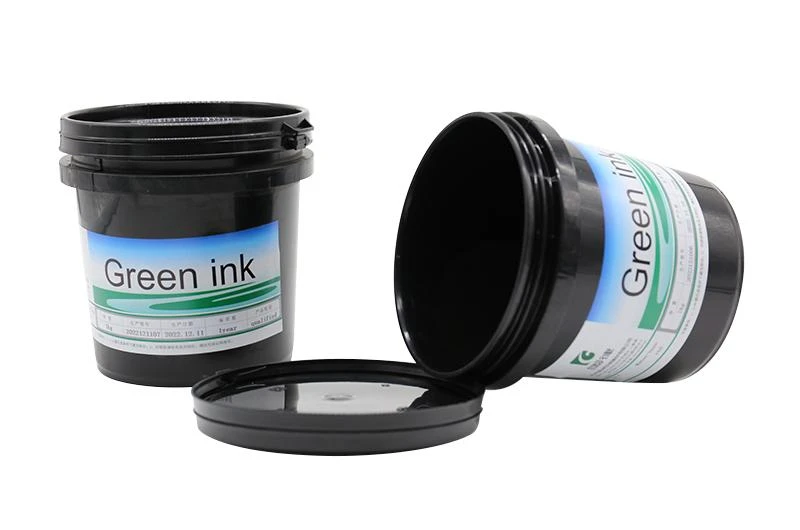
2 Composition of water-based ink
Water-based ink Water-based ink is referred to as water ink, and flexographic water-based ink is also called liquid ink. It is mainly made of binders, pigments, solvents, additives and related additives through composite grinding.
1. Binder
The key component of water-based ink is the binder, among which water-soluble resin or water-dispersible resin is regarded as the binder of water-based ink. This type of binder has a significant impact on the viscosity, adhesion, gloss drying and printing adaptability of the ink. As a high molecular polymer, water-based resin dispersant has excellent water solubility and stability. Its function is to give the ink good fluidity and adhesion, while helping to reduce the viscosity of the ink, making it easier to print.
In my country, rosin-modified maleic acid resin is usually used as a binder to make ink, but this type of ink is only suitable for printing ordinary cartons and cannot meet the gloss and water resistance requirements of medium and high-end packaging printing. Ethyl formate resin has good stability, but its printing adaptability and solubility are relatively poor. In addition, there are also cases of using styrene-modified maleic acid resin, water-based amino resin, and polymer resins such as polyvinyl alcohol and carboxymethyl cellulose. These polymer resins usually contain hydrophilic groups such as -COOH (carboxyl), -OH (hydroxyl), and -NH2 (amine). After a specific process treatment, it is completely soluble in water and can be used as a binder for water-based inks. However, these binders still have shortcomings to some extent, and will have varying degrees of impact on the printing adaptability, gloss, and water resistance of water-based inks.
2. Pigments
Pigments are substances used to show color in water-based inks. According to printing requirements and image characteristics, different types of pigments can be selected, such as inorganic pigments, organic pigments, and metallic pigments. The selection of pigments should take into account their dispersibility, hiding power, light resistance, and weather resistance in inks.
3. Solvents
Solvents play a role in regulating viscosity, drying speed and printing performance in water-based inks. Compared with traditional inks, water-based inks have a lower solvent content and usually use environmentally friendly solvents such as alcohols, esters, ketones, etc.
The main solvent of water-based inks is water. While playing the role of dissolving resins, regulating viscosity, and promoting drying, it effectively reduces volatile organic compound (VOC) emissions and reduces environmental pollution. However, the water content has a significant impact on the fluidity, drying speed and printing effect of the ink. Therefore, in the actual printing process, it is necessary to adapt and adjust according to specific conditions.
The selection of water-based ink solvents should take into account the printing performance and environmental protection requirements of the ink.
4. Additives
Additives are a type of additive used to improve the performance of inks, such as dispersants, emulsifiers, thickeners, defoamers, etc. The addition of additives can improve the stability, adhesion, anti-precipitation and other properties of the ink, and ensure that the ink maintains good leveling and printing effects during the printing process.
The reasonable matching and ratio of these ingredients determine the printing performance, environmental protection performance and printing effect of water-based inks.

3 Classification of water-based inks
Different water-based inks can be classified according to the classification of their printing methods and application fields.
- Classification by printing method
① Offset water-based ink: Mainly used for offset printing, with good adhesion, water resistance and weather resistance, suitable for paper, packaging, labels and other printing fields.
② Screen water-based ink: Mainly used for screen printing, with high solid content, quick drying and good adhesion, suitable for printing of plastics, textiles, glass and other materials.
③ Flexographic water-based ink: Mainly used for flexographic printing, with good printing performance and environmental protection performance, suitable for various packaging, labels, instructions and other printing fields.
④ Gravure water-based ink: Mainly used for gravure printing, with high adhesion, high solid content and good printing resistance, suitable for printing of packaging materials such as paper and plastic.
- Classification by application field
① Paper printing water-based ink: Mainly used for paper printing, with good printing performance and environmental protection performance, suitable for printing of various cultural supplies, packaging, labels and other printing.
② Water-based ink for plastic printing: Mainly used for printing plastic products, with high adhesion, wear resistance and weather resistance, suitable for various plastic packaging, toys, home appliances and other printing fields.
③ Water-based ink for textile printing: Mainly used for textile printing, with good permeability, adhesion and environmental protection performance, suitable for printing fields such as clothing, home textiles, shoes and hats.
④ Water-based ink for glass printing: Mainly used for printing glass products, with high adhesion, high temperature resistance and good chemical resistance, suitable for printing fields such as architectural glass and home glass.
4 Application fields of water-based ink
Water-based ink occupies an important position in many industries such as paper, plastic weaving and plastic film.
1. Application of water-based ink in paper. Various papers such as kraft paper, coated paper, thermal paper, glassine paper, release paper and corrugated cardboard can be printed with water-based ink. Printed products include common cartons, paper bags and self-adhesive paper. For food-grade products, such as paper plates, paper cups, napkins and paper straws, the requirements for water-based inks are higher.
2. Water-based inks are also widely used in plastic woven products. Common plastic woven materials such as LDPE, HDPE and PP woven products can be made into woven bag products such as cement bags, feed bags, container bags and flour bags after printing.
3. Water-based inks also play an important role in plastic film products. Film-type non-absorbent materials such as LDPE, HDPE, BOPP, PVC, PET and PO can be printed with water-based inks. Plastic packaging products such as vest bags, clothing bags, garbage bags, express bags and chemical bags, as well as food-grade products such as diapers, sanitary napkins and snack bags can all be printed with water-based inks.
4. Application in the fields of flexographic printing and gravure printing. In the fields of food packaging, tobacco and alcohol packaging, children's toy packaging, etc., water-based inks occupy a large proportion. According to data, 95% of narrow-edition flexographic paper prints are printed with water-based inks, and 80% of gravure paper prints are also printed with water-based inks. However, although my country has developed rapidly in recent years, there is still a certain gap between the application level in China and that in foreign countries.
In addition, water-based inks can also produce excellent results on products such as textiles and furniture. Water-based photocurable inks can also be used on non-paper substrates such as PVC, PET or synthetic paper.
In my country, the research and development and application of water-based inks have achieved remarkable results, but they still need to be further promoted to meet the needs of domestic and foreign markets. With the continuous improvement of environmental awareness, water-based inks have been widely used in packaging, advertising, textiles and other fields, and are expected to gradually replace traditional inks and become the mainstream choice of the printing industry in the future.


