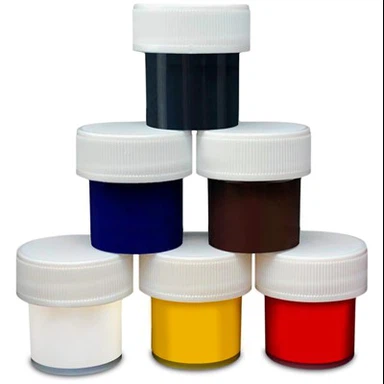
Great Offset Printing Ink For Clarity And Brightness
Feb 24, 2025
1. Core technology breakthroughs from the perspective of materials science
2. Synergistic optimization of optical properties through process control
3. Synergistic effect of special additive systems
4. Technological innovation under the trend of environmental protection
5. Quality verification and standard system
1. Core technology breakthroughs from the perspective of materials science
Highly water-resistant resin-based binder system
Modern offset inks use synthetic resins such as phenolic resins and alkyd resins as the main binder. The regularity of their molecular chains and cross-linking density directly affect the uniformity of light reflection of the ink film. Compared with traditional vegetable oil-based materials, synthetic resins have higher film-forming stability (surface roughness is reduced by 30%-50%) and anti-emulsification properties, which can effectively reduce the diffuse reflection of the ink layer caused by water absorption of paper during printing. Taking soybean oil-modified resin as an example, its double bond structure forms a dense network structure during the oxidative polymerization process, which not only meets environmental protection requirements, but also makes the gloss of the ink layer reach a high-gloss effect of more than 85GU at an incident angle of 90°.
Nanoscale pigment dispersion technology
The fineness of pigment particles directly determines the color saturation and clarity. Experimental data show that when the pigment particle size is reduced from 1μm to 200nm, the color intensity of the same color ink is increased by 40%, and the sharpness of the dot edge is increased by 22%. The use of silane coupling agents to coat the surface of organic pigments (such as Flint 57:1 Lithol Red system) can not only prevent color deviation caused by pigment aggregation, but also enhance the compatibility of pigments and resins, so that printed products show a blue phase enhancement effect under UV light sources. Especially in the four-color ink system, the application of nano-scale carbon black (particle size <80nm) can increase the contrast of text printing to 1:300.
2. Synergistic optimization of optical properties through process control
Precise control of ink layer thickness
The thickness of the offset ink film needs to be controlled within the golden range of 1.2-1.8μm: too thin will lead to insufficient pigment hiding power (the hiding rate decreases by 35% when <0.8μm), and too thick will cause light interference effect (the clarity decreases by 18% when >2μm). Through closed-loop control of ink fountain temperature (±0.5℃ accuracy) and UV-LED curing energy gradient adjustment, high-precision replication with a dot enlargement rate of <12% can be achieved.
Innovation in composite drying process
When using an infrared-UV hybrid drying system, the infrared segment (3-5μm wavelength) evaporates the solvent first, and the UV segment (365nm/395nm dual wavelength) triggers the cross-linking reaction of the photoinitiator. This staged curing can reduce the surface tension of the ink layer from 42mN/m to 28mN/m, forming a mirror-level smooth surface and stabilizing the color density value at D=2.3±0.0525. Actual tests show that mixed drying can increase brightness by 15% and reduce ink layer shrinkage and deformation by 40% compared with a single drying method.
3. Synergistic effect of special additive systems
1. Physical-chemical synergy
Additives interact with each other by changing the physical state (such as surface tension and viscosity) and chemical activity (such as oxidative polymerization rate) of ink.
Fluorocarbon surfactants and wax additives: Fluorocarbon surfactants (such as perfluoroalkyl ethyl acrylate) can reduce the surface tension of ink from 36dyn/cm to 22dyn/cm, promoting uniform spreading; while wax additives (such as polyethylene wax) enhance the wear resistance of ink layer through microcrystalline structure. The two synergistically reduce orange peel (Ra<0.05μm) and improve gloss.
Desiccant and demulsifier: White drying oil (metal soap) accelerates drying by catalyzing oxidation reaction, while demulsifier (such as phosphate ester) inhibits excessive mixing of ink and fountain solution. The combination of the two can balance drying speed and printability.
Functional complementation and synergy
Fluorescent brightener and dispersant: Rare earth doped phosphors (such as SrAl₂O₄:Eu) need to rely on high-efficiency dispersants (such as silane coupling agents) to achieve uniform dispersion at the nanoscale, thereby forming a synergistic effect in color intensity and color gamut expansion (increased by 18%).
Bio-based resins and antioxidants: High-transmittance bio-resins such as polyhydroxyalkanoates (PHA) are susceptible to oxidative degradation, and natural antioxidants (such as tocopherol) need to be added to extend the stability of the ink.
2. Application of key synergistic technologies
Friction resistance and anti-skinning synergistic system
Wax-organic silicon composite additive: Combining microcrystalline wax (particle size 1-5μm) with polydimethylsiloxane can form a gradient structure on the surface of the ink layer: the upper layer of siloxane reduces the friction coefficient (down to 0.15), and the bottom layer of wax crystals enhances scratch resistance, so that the number of friction resistance of printed products is increased to more than 5,000 times.
Anti-skinning agent and quick-drying agent: Butanone oxime anti-skinning agent inhibits surface film formation by chelating metal ions. When used with red drying oil (cobalt-based), the ratio must be precisely controlled (0.1%-0.3%) to avoid delayed drying.

Cooperative optimization of environmental performance
Biodegradable resin and water-based additives: Soybean oil-modified alkyd resin with water-based dispersant (such as ammonium polyacrylate) can reduce the VOCs emission of ink to below 1g/kg while maintaining 160% ISO brightness value.
Nano photocatalyst and UV curing system: Titanium dioxide nanoparticles (10-20nm) simultaneously play the role of light initiation and decomposition of organic pollutants in UV-LED curing, reducing the energy consumption of post-printing processing.
one-stop
solution
professional
team
high
quality
4. Technological innovation under the trend of environmental protection
Environmentally friendly raw materials
Biological-based resins replace petroleum-based materials: synthetic resins modified with renewable resources such as soybean oil and castor oil, such as soybean oil-modified alkyd resins, can reduce the VOCs emissions of inks to below 1g/kg.
4, while retaining the printing suitability of traditional inks.
Development of water-based solvent systems: replacing traditional organic solvents with water, combined with dispersants (such as ammonium polyacrylate) to achieve stable suspension of pigments, solving the high VOC problem of traditional inks.
Efficient production process
UV/EB curing technology: using ultraviolet rays or electron beams to instantly cure inks, without the need for volatile solvents, reducing energy consumption by more than 50%, and shortening the curing time to 0.1-1 seconds, suitable for high-safety fields such as food packaging.
Nanotechnology integration: adding nano zinc oxide (50nm) or titanium dioxide (10-20nm) particles to improve the thermal conductivity and photocatalytic degradation ability of inks, while enhancing the weather resistance of printed products.
2. Key breakthrough technologies
Low VOC composite additive system
Anti-skinning and quick-drying synergistic technology: Butanone oxime anti-skinning agent and cobalt-based red drying oil are compounded at a ratio of 0.1%-0.3%, which not only inhibits the oxidation of the ink surface, but also keeps the drying speed within 30 seconds.
Biodegradable additives: Polyhydroxyalkanoates (PHA) combined with tocopherol antioxidants make the ink degradation rate reach more than 90% within 180 days in the natural environment.
Smart responsive ink
Application of temperature-sensitive/photosensitive materials: Spiropyran derivatives change color under specific wavelength light and are used for anti-counterfeiting labels; thermochromic pigments (such as cholesteric liquid crystals) change color when the temperature changes, expanding the interactive function of packaging.
3. Practical applications and market cases
Food packaging field
Water-based UV offset ink achieves solvent-free printing on PET plastic substrates, passes FDA certification, and has a friction resistance of more than 5,000 times, meeting the needs of high-speed production lines.
Publishing and printing field
Quick-drying glossy ink uses an isocyanate prepolymer system. After curing in an oven at 80-100°C, the gloss reaches 95GU, and the drying time is shortened by 40%. It is suitable for high-gloss scenes such as magazine covers.
5. Quality verification and standard system
Quantitative evaluation of optical performance
BYK-mac multi-angle spectrophotometer is used to measure at 15°/45°/75° observation angles, requiring the brightness factor L* value to be greater than 95 and the color difference ΔE of the same batch of products to be less than 1.2 (ISO 13655). For metallic texture prints, the mirror gloss (20° angle>95GU) and sparkle value (>120counts/mm²) must also be tested.
Durability verification method
The xenon lamp aging test (ISO 11341 standard) requires the color difference value ΔE<3.5 and gloss retention rate>85% after 500 hours of irradiation. When the cross-hatch method (ASTM D3359) is used for testing, the ink layer adhesion level is required to reach 5B.