Cigarette Packaging Boxes
Cigarette Packaging Boxes are folding cartons designed to hold and protect cigarette products while presenting brand information on the outer packaging. They are generally made from printed paperboard and formed through printing, die-cutting, creasing, folding, and gluing processes.
The box structure is developed according to the cigarette pack format, internal product arrangement, and packaging line requirements. Paperboard grade, thickness, dimensions, closure design, and surface finish are coordinated to match the intended packaging application.
- Fast Delievery
- Quality Assurance
- 24/7 Customer Service
Product Introduction
Features of Cigarette Packaging Boxes
Paperboard Construction
The carton uses a selected paperboard grade to provide the stiffness needed to maintain its shape during filling, handling, and distribution.
01
Folding Carton Design
Die-cut panels and crease lines form the box body, side walls, top closure, and bottom structure.
02
Printed Brand Graphics:
Product names, logos, colors, and required information are arranged according to the approved artwork.
03
Surface Finishing
Coating and decorative treatments can be selected according to the visual design and surface requirements.
04
Specification Matching
Box dimensions, board thickness, folding structure, and artwork layout can be developed around different cigarette pack formats.
05
Paperboard Selection for Cigarette Packaging Boxes
Paperboard selection affects carton stiffness, folding behavior, surface appearance, and printing results. The appropriate grade depends on the box dimensions, structural design, and converting process.
Key material considerations include:
- Board Thickness: The caliper should match the carton structure and the required rigidity.
- Paper Surface: Surface smoothness and coating characteristics influence ink transfer, color presentation, and finishing results.
- Board Stiffness: The paperboard needs to maintain the intended box shape after folding and assembly.
- Dimensional Stability: Consistent board dimensions help control die-cutting, creasing, and carton forming.
The paperboard specification should be confirmed together with the box design rather than selected independently.
Cigarette Box Structure and Folding Design
The carton structure determines how the paperboard is converted into a finished box. The main panels and connecting sections must be arranged according to the required pack dimensions and closure method.
Structural development focuses on:
- Box Dimensions: Length, width, and height are matched to the intended cigarette pack format.
- Panel Layout: Front, back, side, top, and bottom panels are arranged according to the carton design.
- Crease Positions: Crease lines guide folding and help form consistent edges and corners.
- Closure Structure: Top and bottom closures are designed to secure the carton after filling.
- Assembly Requirements: Panel connections and adhesive areas are considered during carton layout development.
A structural drawing or physical sample can be used to confirm the box dimensions and folding arrangement before production.
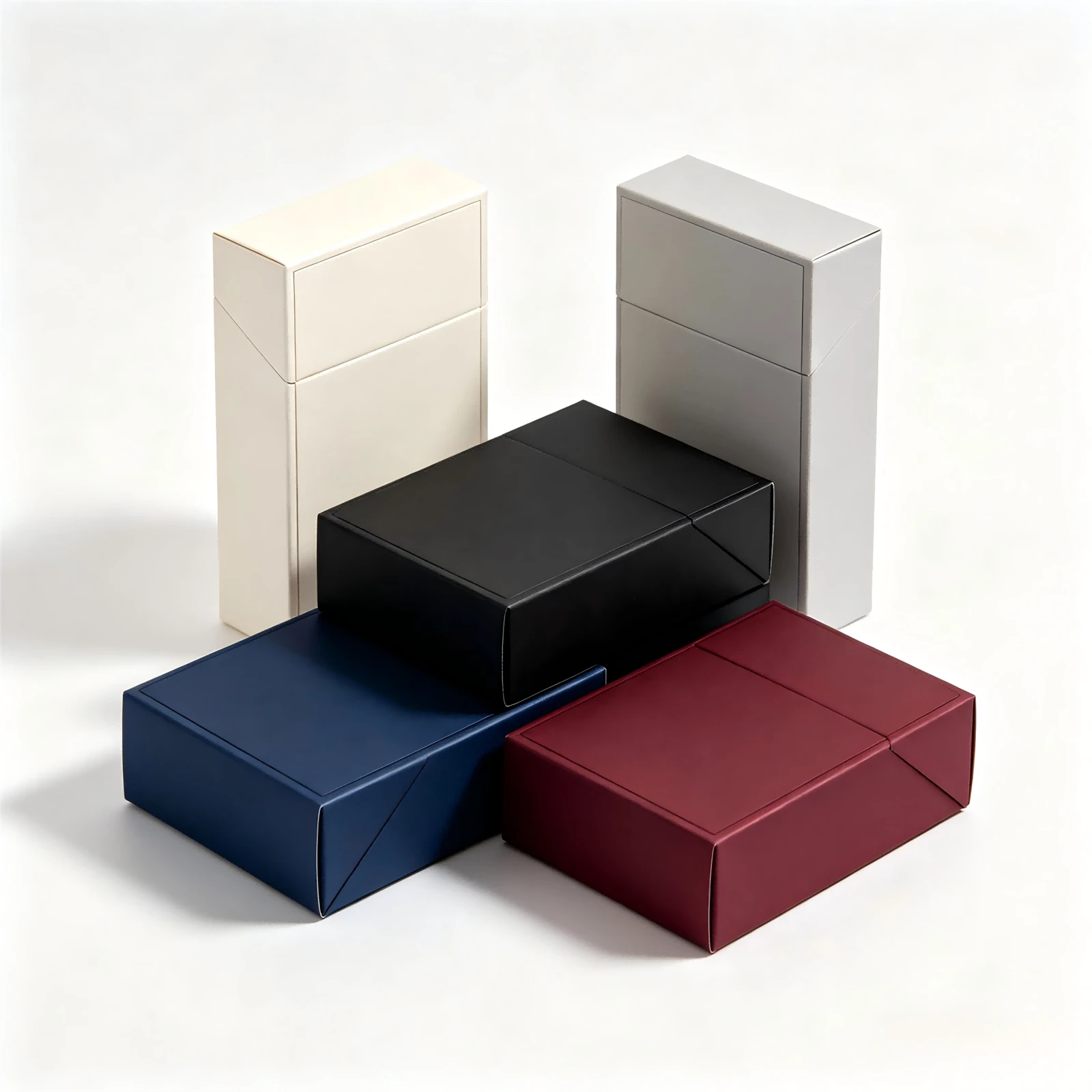
Cigarette Packaging Boxes Printing and Surface Finishing Options
The printed surface carries brand graphics and product information. Artwork preparation should account for panel positions, folding areas, and the final appearance of the assembled carton.
Printing and finishing requirements can include:
- Color Printing: Brand colors, logos, text, and graphic elements are arranged across the carton panels.
- UV Coating: Selected surface areas can receive UV coating according to the artwork and finishing requirements.
- Water-Based Coating: Coating options can be evaluated based on the paperboard surface and intended finish.
- Decorative Effects: Special visual treatments can be specified for particular brand elements.
- Artwork Positioning: Text and graphics are placed to avoid interference with crease lines, cutting edges, and glued areas.
Artwork files should be reviewed together with the carton dieline to check panel alignment and printing positions.
FAQ
Q: What information should be provided when requesting a quotation for cigarette boxes?
A: Provide the box dimensions, paperboard requirements, structural drawing or sample, printing artwork, surface finish, estimated order quantity, and packaging format. These details help establish the scope of the project.
Q: Can an existing cigarette box be used as a reference for a new design?
A: Yes. An existing carton can serve as a reference for dimensions, folding structure, panel layout, and appearance. The final specifications should be reviewed and confirmed before production.
Q: Can different cigarette box designs be managed under one project?
A: Different designs can be evaluated separately according to their dimensions, artwork, materials, and structural requirements. Each approved version should have its own clearly identified specification record.
Q: How should artwork revisions be handled after sample approval?
A: Revised artwork should be submitted with a clear version number and change description. The updated file should be checked against the carton dieline before it is used for production.
Hot Tags: cigarette packaging boxes, China cigarette packaging boxes manufacturers, suppliers, factory
No Information