Industrial Applications Of Water-Based Inks in Packaging Printing
May 26, 2026
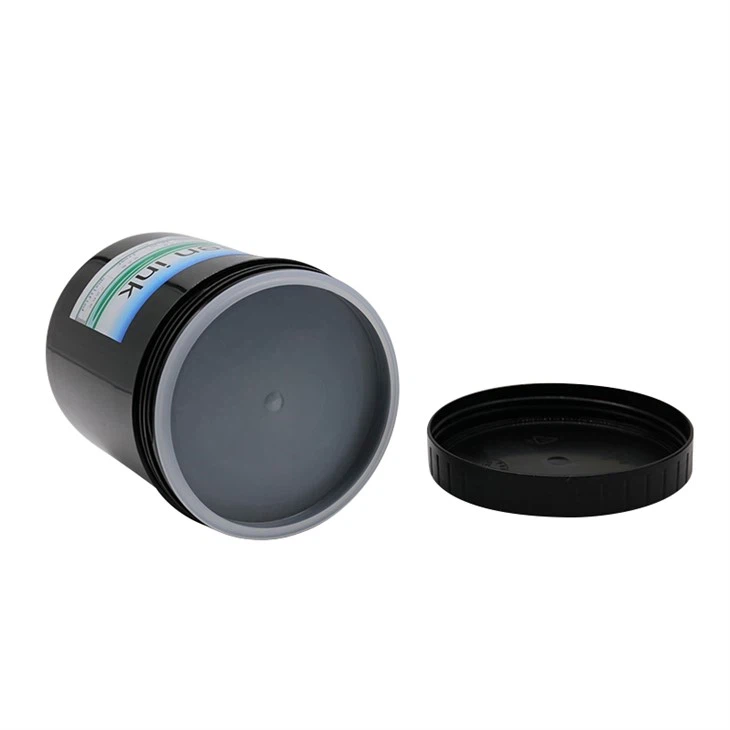
Under the backdrop of stricter global environmental regulations, upgraded food contact safety standards, and the low-carbon transition of the printing industry, water-based inks have changed from alternative eco-friendly materials into essential industrial consumables for the packaging printing sector. Using water as the main dispersion medium, these inks feature extremely low VOC emissions, zero benzene solvent residues, and non-flammable properties. They are compatible with mainstream packaging substrates including paper, woven plastics, and plastic films, and can be steadily applied in industrial production lines such as flexographic, gravure, offset, and screen printing. This article systematically explains the industrial implementation logic and practical value of water-based inks in packaging printing from the perspectives of material properties, application scenarios, key breakthroughs in plastic gravure printing, and industry trends, providing actionable references for B2B printing enterprises and packaging manufacturers.
Core Industrial Properties and Adaptation Logic of Water-Based Inks
Water-based inks use waterborne acrylic resin and waterborne polyurethane resin as film-forming components, matched with water-based dispersion systems, colorants, pH adjusters, defoamers, and leveling agents. The most distinct difference from traditional solvent-based inks is that organic solvents are fully replaced by water.
In industrial production, they have three quantifiable core properties:
- Low VOC emissions: Volatile components are dominated by water, reducing VOC emissions by more than 80% compared with benzene and ketone solvent inks, and can directly meet VOC limits in key regions in China.
- High solid content and controllable drying: High solid content delivers strong ink hiding power; drying relies mainly on volatilization, supplemented by resin cross-linking film formation, matching the drying air duct design of high-speed printing lines.
- Food contact safety: Free from benzene, ketone, and ester residue risks, they pass food packaging migration tests and meet compliance requirements for paper tableware, flexible food packaging, and children's product packaging.
These properties define their industrial positioning: not a simple replacement for traditional inks, but a new-generation packaging printing system oriented toward compliance, safety, and low carbon. They do not depend on high-concentration organic solvents for transfer and film formation, thus significantly reducing enterprises' operation and compliance costs in workshop safety, waste gas treatment, and employee occupational health.
Industrial Applications in Core Packaging Printing Scenarios
Water-based inks have achieved full substrate coverage and full process adaptation in the packaging field, with mature industrial solutions from paper products to flexible plastic packaging.
Paper Packaging Printing
Paper is an absorbent substrate with the highest compatibility with water-based inks, making it the most widely used and cost-controllable sector at present.
Applicable substrates include kraft paper, coated paper, thermal paper, glassine paper, release paper, corrugated cardboard, etc.
End products cover transport cartons, paper bags, self-adhesive labels, paper trays, paper cups, napkins, paper straws, and other food-contact products.
In industrial production, paper printing can directly adopt water-based inks for high-speed flexographic and gravure printing without major oven modification. 95% of narrow-web flexographic paper prints and 80% of gravure paper prints use water-based systems, with stability and yield reaching the same level as solvent-based inks.
Woven Plastic Packaging
Woven plastic materials are based on LDPE, HDPE, and PP, mostly used for load-bearing industrial packaging with high requirements for ink adhesion and friction resistance.
Applications of water-based inks in this sector have been standardized: surface pretreatment increases substrate tension, and with high-adhesion water-based resin systems, stable printing can be achieved on cement bags, feed bags, container bags, flour bags, and other products. Their advantages include no pungent odor after printing, no contamination to contents, and meeting abrasion and weather resistance requirements in storage and transportation, suitable for packaging scenarios with long-term outdoor stacking.
Plastic Film Packaging
Plastic film is a non-absorbent substrate with higher technical barriers but the most urgent market demand.
Applicable substrates include LDPE, HDPE, BOPP, PVC, PET, NY, PO, etc.
End products include vest bags, garment bags, courier bags, chemical bags, as well as snack bags, diapers, sanitary napkins, and other food and hygiene products.
On industrial lines, film printing requires corona or flame treatment to enhance surface tension, coupled with a medium-temperature and high-air-volume drying system to achieve stable transfer and film formation, solving the pain points of high residue and strong odor of traditional solvent-based inks.
Flexographic and Gravure Printing
The real industrial breakthrough of water-based inks does not lie in single-material adaptation or partial substitution, but in the formation of a cross-substrate, cross-process, equipment-matched, and digitally controllable industrial system that supports full‑line stable production across the entire packaging printing industry. This system-level upgrade enables water-based inks to move from small‑batch trial to large‑scale standardized application, and becomes the core driving force for the green transformation of the whole industry.
The Key Industrial Breakthrough For Water-Based Inks
For a long time, slow drying and surface sealing restricted industrial application. The key breakthrough is the establishment of a two‑stage segmented drying mode that replaces single‑stage high‑temperature heating. The first stage uses low‑temperature pre‑drying to avoid rapid surface film formation; the second stage uses medium‑temperature high‑air‑volume convection to remove internal moisture completely. This technology shortens drying length, reduces energy consumption, and eliminates interlayer adhesion, pinholes, and blushing. It enables water‑based inks to stably run on high‑speed lines of 100–300 m/min, reaching the efficiency of solvent‑based systems.
Breakthrough in Drying Technology
regulatory enforcement: Traditional plastic gravure uses a large number of benzene, ester, and ketone solvents, resulting in high VOC emission intensity, which has been included in key control in many regions.
food safety: Flexible packaging directly contacts food, and solvent residues carry migration risks; water-based inks have almost no residue, meeting the compliance bottom line of brand owners.
production safety: Eliminating flammable and explosive risks of organic solvents, reducing investment in workshop explosion protection and waste gas treatment, and improving the working environment for employees.
Breakthrough in Process Adaptability
The most essential breakthrough is that water‑based inks have changed from "environmentally friendly but high‑cost products" to cost‑effective compliance solutions. With resin technology maturity and large‑scale production, ink unit cost, energy consumption, and exhaust treatment cost keep decreasing. Meanwhile, water‑based systems remove fire and explosion risks, lower environmental inspection thresholds, reduce solvent residue and odor complaints, and improve product qualification rate. This value shift makes water‑based inks move from passive compliance to active selection for industrial printing enterprises.
Breakthrough in Industrial Value
The most essential breakthrough is that water‑based inks have changed from "environmentally friendly but high‑cost products" to cost‑effective compliance solutions. With resin technology maturity and large‑scale production, ink unit cost, energy consumption, and exhaust treatment cost keep decreasing. Meanwhile, water‑based systems remove fire and explosion risks, lower environmental inspection thresholds, reduce solvent residue and odor complaints, and improve product qualification rate. This value shift makes water‑based inks move from passive compliance to active selection for industrial printing enterprises.