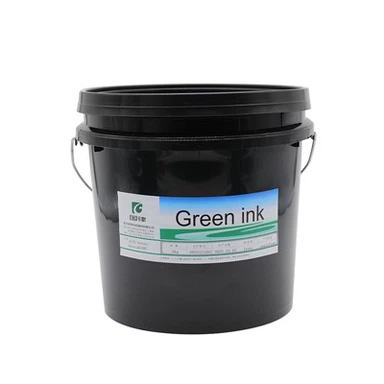
High-quality Water Based Ink
This ink uses water as its primary solvent, significantly reducing volatile organic compound (VOC) emissions and odor during the printing process. It also offers a soft feel, vibrant colors, and excellent washability.
- Fast Delievery
- Quality Assurance
- 24/7 Customer Service
Product Introduction
How to Choose the Right Heat-Resistant UV Flexo Ink
1. Clarify the High-Temperature Scenario & Required Resistance Range
First, define the specific high-temperature conditions your printing project faces-this is the core of selection.
Differentiate between "instant high temperature" (e.g., 180-200℃ heat sealing for snack bags) and "continuous high temperature" (e.g., 150-180℃ long-term use for electronic labels). Choose inks with matching max temperature (e.g., 200℃ instant resistance for heat-seal packaging, 180℃ continuous resistance for electronics).
Don't ignore low-temperature tolerance: If the product needs frozen storage (-20~-40℃, like ice cream cartons), ensure the ink resists cracking or peeling after temperature shocks (pass ASTM D1148 temperature cycle tests).
2. Match the Ink to the Printing Substrate
The ink's adhesion depends entirely on compatibility with the substrate-avoid poor bonding or peeling.
For food-grade films (PE, BOPP, kraft film): Select inks designed for low-surface-energy materials (no primer needed) to ensure tight bonding, such as formulas optimized for food packaging.
For electronics-related substrates (PET, aluminum foil, PCB labels): Prioritize inks with strong adhesion to non-porous materials, and check if they resist corrosion from electrolytes or soldering fluids.
For recycled plastics/paperboard: Choose inks with enhanced adhesion to recycled materials (to bypass primer use) and comply with sustainability standards (e.g., FSC for paper).
Verify adhesion strength via ISO 2409 (aim for ≥4B).
3. Confirm Industry Compliance Requirements
Different industries have strict regulatory thresholds-non-compliant inks risk project failure.
Food packaging: Must meet food contact safety standards (FDA 21 CFR 175.300 for the US, EU 10/2011 for Europe) and have low heavy metal content (Pb/Cd/Hg <10ppm) to avoid migration to food.
Electronics labels: Comply with RoHS (restrict toxic substances) and UL 94 V-0 (flame retardancy) to ensure safety in high-temperature electronic environments.
Sustainable projects: Opt for inks with EU ECOLABEL or ASTM D6400 (compostable) certifications if using biodegradable/recycled substrates.
4. Align with Printing Process & Production Efficiency
The ink must fit your existing equipment and production speed to avoid delays.
Curing speed: Match the ink's UV curing time (3-6 seconds under 80W/cm UV lamps) to your flexo press speed (e.g., 300m/min high-speed lines need inks that cure in 3-5 seconds). Confirm compatibility with your UV lamp type (mercury/LED, 395nm wavelength recommended).
Viscosity & operability: Ensure the ink's viscosity (250-350 cP at 25℃, Brookfield) matches your anilox roll specification (80-120 LPI). If you need to adjust viscosity, check if the ink is compatible with UV ink thinners (to avoid affecting heat resistance).
Post-print processes: If adding overcoats (for scratch resistance), confirm the ink is compatible with water-based/UV-curable overcoats (no peeling after overcoating).

FAQ:
My flexo press uses a 60W/cm UV lamp, but most heat-resistant UV flexo inks recommend 80W/cm. Can I still use these inks, or do I need to upgrade the lamp?
You don't need to upgrade the lamp-instead, align the ink with your existing equipment (per the "match printing process" rule):
Choose inks with "low-energy curing" formulas (many suppliers offer this as a custom option for the FH-200/EH-180 series). These inks cure in 6-8 seconds under 60W/cm lamps (vs. 3-5s for 80W/cm).
Adjust press parameters to compensate: Slow down the line speed (from 300m/min to 200-250m/min) or reduce the lamp distance (from 15cm to 10-12cm) to boost UV energy exposure.
Test curing completeness after adjustment: Use a pencil hardness test (≥2H) or tape adhesion test (no ink transfer) to ensure the print is fully cured-uncured ink will lose heat resistance.
I need consistent color for my brand's heat-sealed packaging (PMS 485 red). How do I ensure the heat-resistant UV flexo ink doesn't change color after 180℃ heat sealing?
Focus on color stability under high temp (combining "high-temp scenario" and "print quality" needs):
Select inks with high-temperature stable pigments (e.g., inorganic pigments for reds-they resist discoloration better than organic pigments at >150℃). Ask suppliers to provide a "color retention report" showing ΔE <1.5 after 180℃ (2s) heat sealing.
Do a small-batch test first: Print a sample, heat-seal it at 180℃, then compare the color to the original PMS swatch using a spectrophotometer. Avoid inks that shift to orange or pink after heat exposure.
If custom color matching is needed, confirm the supplier uses heat-stable pigment blends-some low-cost custom inks cut corners with non-heat-resistant pigments, leading to color failure.
Hot Tags: high-quality water based ink, China high-quality water based ink manufacturers, suppliers, factory, curing water based ink with iron, Silk Screen Printing Water Based Ink, Water Based Screen Ink, curing water based ink with flash dryer, water based ink screen printing t shirts, Water Based Silkscreen Ink