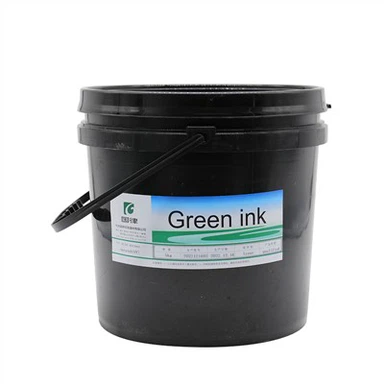
Best Water Based Screen Printing Ink
Water based screen printing ink is designed for textile printing with stable color output and controlled printing performance. It uses water as the main carrier with waterborne resin, pigments, and additives to form a stable screen printing system.
It is suitable for manual, semi-automatic, and automatic textile printing lines, supporting stable viscosity, mesh printing, and curing control.
Compared with solvent-based ink, it uses water evaporation and heat curing to form a film layer that bonds to fabric through surface adhesion and partial fiber penetration.
- Fast Delievery
- Quality Assurance
- 24/7 Customer Service
Product Introduction
The performance of the ink is controlled through three main structural factor
1. Resin film-forming system
The waterborne resin determines how the ink layer behaves after drying. It forms a flexible polymer film that maintains elasticity while providing adhesion strength to textile fibers. The film structure is designed to resist cracking during repeated bending and stretching of fabrics.
2. Pigment dispersion system
Pigments are processed through high-energy dispersion to achieve uniform particle distribution. This reduces sedimentation during storage and improves color consistency during long printing runs. Stable dispersion also helps prevent mesh blockage and improves printing continuity.
3. Rheology control system
Viscosity modifiers and flow regulators are used to control ink behavior during printing. The ink is designed to maintain stable flow under shear force from the squeegee, while avoiding excessive spreading on the fabric surface.
Application behavior on fabrics
On cotton fabrics
The ink penetrates partially into fiber gaps and forms a strong mechanical bond after curing. This results in stable adhesion under washing and abrasion conditions.
On polyester fabrics
The ink mainly forms a surface film. Adhesion is improved through heat curing and optional fabric pre-treatment processes such as plasma or primer coating.
On blended fabrics
The ink adapts to mixed fiber structures, forming both surface bonding and partial penetration depending on fiber composition.
Product Data
| Parameter | Specification |
|---|---|
| Product type | Water based textile screen printing ink |
| Appearance | Colored paste (adjustable pigment system) |
| Carrier system | Waterborne polymer dispersion |
| Solid content | 35% – 60% (depending on color formulation and application requirement) |
| Viscosity range | 20,000 – 80,000 mPa·s (25°C, Brookfield standard) |
| pH value | 7.5 – 9.0 |
| Curing temperature range | 120°C – 160°C |
| Curing time | 1.5 – 5 minutes (hot air or tunnel drying system) |
| Drying mode | Water evaporation + thermal curing film formation |
| Dilution medium | Deionized water or compatible water-based reducer |
| Mesh compatibility | Suitable for medium to high mesh counts depending on pigment density |
| Storage temperature | 5°C – 30°C |
| Shelf stability | 6–12 months under sealed storage conditions |
Substrate compatibility
- ✔ Cotton fabrics (T-shirt, canvas, cotton bags)
- ✔ Polyester fabrics (sportswear textiles with heat curing requirement)
- ✔ Cotton-polyester blended fabrics
- ✔ Textile-based packaging materials
- ✔ Decorative fabric surfaces
Process compatibility
- ▪ Manual screen printing tables
- ▪ Semi-automatic screen printing machines
- ▪ Fully automatic textile printing production lines
- ▪ Flat-bed and rotary screen systems (depending on ink viscosity adjustment)


Product Highlights
Controlled viscosity stability
The ink system is designed to maintain stable rheological behavior during continuous printing. Even under long production cycles, viscosity variation remains within a controlled range, reducing interruptions.
Fine pigment dispersion
Pigment particles are processed through multi-stage dispersion and stabilization. This reduces aggregation and sedimentation, helping maintain consistent color density across different batches.
Adjustable curing compatibility
The ink supports different curing profiles depending on production requirements. It can be adapted to low-temperature drying systems or high-temperature tunnel drying systems for flexible integration.
Fabric-specific adhesion
The bonding mechanism changes according to fabric type:
• Cotton: fiber penetration + mechanical locking
• Polyester: surface film bonding + heat-assisted adhesion
• Blended: combined penetration and surface adhesion
Screen printing process stability
The ink is designed to pass through mesh screens without excessive clogging. Flow behavior under squeegee pressure is controlled to reduce ink buildup on the screen surface.
Balanced softness and durability
After curing, the ink forms a flexible film layer that maintains fabric softness while providing resistance to washing and mechanical friction. Perfect coexistence of comfort and durability.
Frequently Asked Questions / FAQ
Q1: What fabrics are suitable for this water based screen printing ink?
A: This ink is suitable for cotton, polyester, cotton-polyester blended fabrics, canvas, and other textile-based materials. For polyester fabrics, heat curing or surface pre-treatment is recommended to improve adhesion stability.
Q2: What is the recommended curing condition?
A: The standard curing range is 120°C to 160°C with a curing time of 1.5 to 5 minutes. The exact parameters depend on fabric thickness, ink layer thickness, and production line speed.
Q3: Can the ink be mixed with other ink systems?
A: It is not recommended to mix with solvent-based inks. Mixing with other water-based inks of compatible resin systems may be possible, but testing is required before mass production to ensure color stability and adhesion performance.
Q4: What happens if curing temperature is too low?
A: Insufficient curing may result in weak adhesion, reduced wash resistance, and surface cracking after repeated mechanical stress. Proper temperature control is required to complete full film formation.
Q5: How should the ink be cleaned from screens and tools?
A: Cleaning should be done immediately after printing using water-based cleaning agents. Delayed cleaning may cause partial drying inside mesh openings, increasing the risk of clogging.
Q6: Does long-term storage affect performance?
A: During long storage, slight separation may occur due to pigment settling. This can be corrected by mechanical stirring before use. The ink should be stored in sealed containers to avoid evaporation and contamination.
Hot Tags: best water based screen printing ink, China best water based screen printing ink manufacturers, suppliers, factory, curing water based ink with flash dryer, curing water based ink with iron, Silk Screen Printing Water Based Ink, water based ink screen printing t shirts, Water Based Screen Ink, Water Based Silkscreen Ink
No Information